AGROLINK
Agrolink is an agricultural website, treated as an information source, which presents on its home page three important variables for the production of a given crop: a news area, a weather area and the…
Family Farming
For a producer to be considered a family farmer, he or she must meet the definitions set out in Law No. 11.326 of July 24, 2006. According to this Law, a family farmer is one who does not hold an area larger than 4 (four) fiscal modules (which corresponds to the minimum area a rural property needs for its operation to be economically viable in Brazil). It is worth noting that the value of the fiscal module varies according to the municipality where the property is located, and can range from 5 to 110 hectares.
Other characteristics required to be a family farmer are running the establishment using predominantly the family's own labor in its economic activities, and having a minimum percentage of the family income coming from economic activities on the property.
Source: Brazil, 2006. Available at: <http://www.planalto.gov.br/ccivil_03/_ato2004-2006/2006/lei/l11326.htm>.
Family Farming
Goals such as the pursuit of positive balances in the country's trade balance, which receives a strong contribution from agricultural exports, may even overshadow the importance of Family Farming within the productive economic landscape. However, we must not forget its fundamental role in Brazil's food supply, contributing to income generation, inflation control and improvement in the sustainability level of agricultural activities.
In terms of food supply, Family Farming stands out for growing a variety of crops that, despite their small scale, are distinguished by their quality and by their highly distributed nature. Its geographic dispersion brings it closer to consumers, favoring mainly the communities farthest from large cities and, consequently, from large distribution centers.
Characterized by small properties, the number of people who benefit from the financial results is also a distinguishing feature, which makes it possible to generate income in regions far from industrialized centers, even offering an alternative for keeping people in the countryside.
Because it is predominantly based on polyculture, that is, the production and supply of varied products, and because of its proximity to the consumer, family production may be less prone to influences, mainly external ones, in the formation of its prices, thus contributing to their stabilization and, therefore, to inflation control.
On the environmental front, which is gaining more and more prominence, Family Farming also stands out for adopting more environmentally sustainable practices, mainly because of its small-scale production and because it avoids the risks posed by the monocultures of large properties. Added to this are the incentives for producing organic foods or foods obtained through agroecology, which give Family Farming products a competitive edge in the pursuit of quality and social and environmental responsibility.
The 2006 Census conducted by the Brazilian Institute of Geography and Statistics (IBGE, 2006) presents significant figures related to national Family Farming:
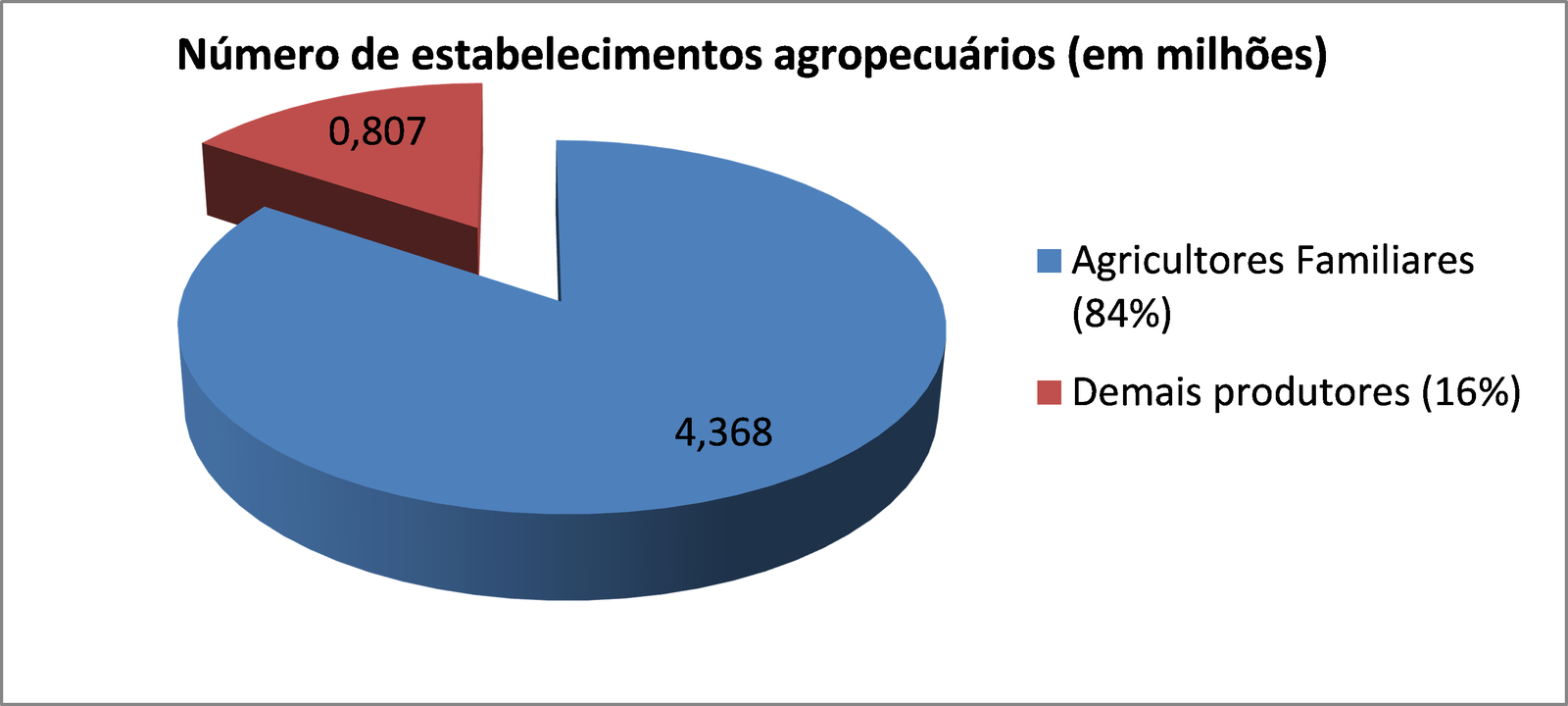
Chart prepared by CoDAF
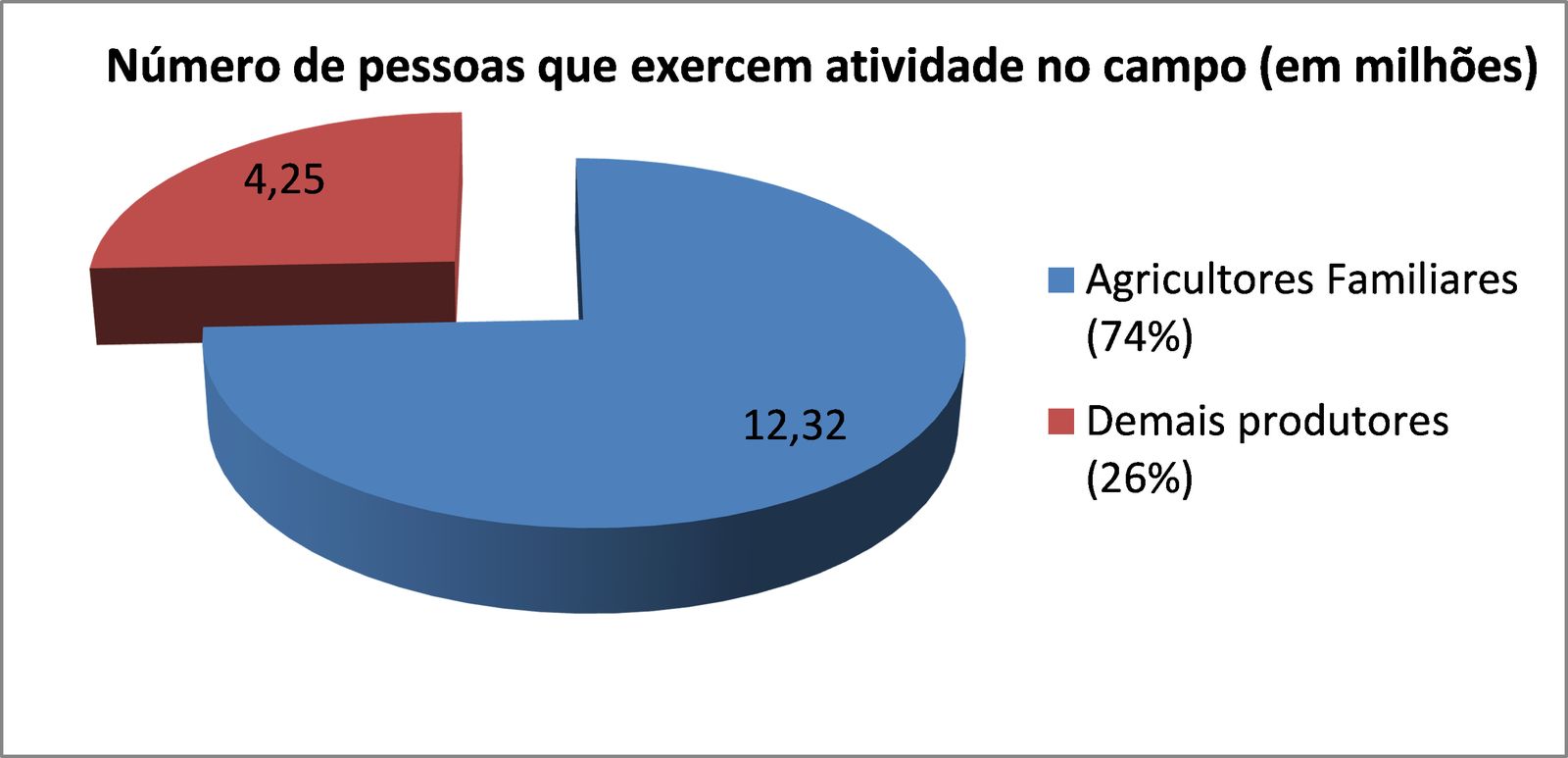
Chart prepared by CoDAF
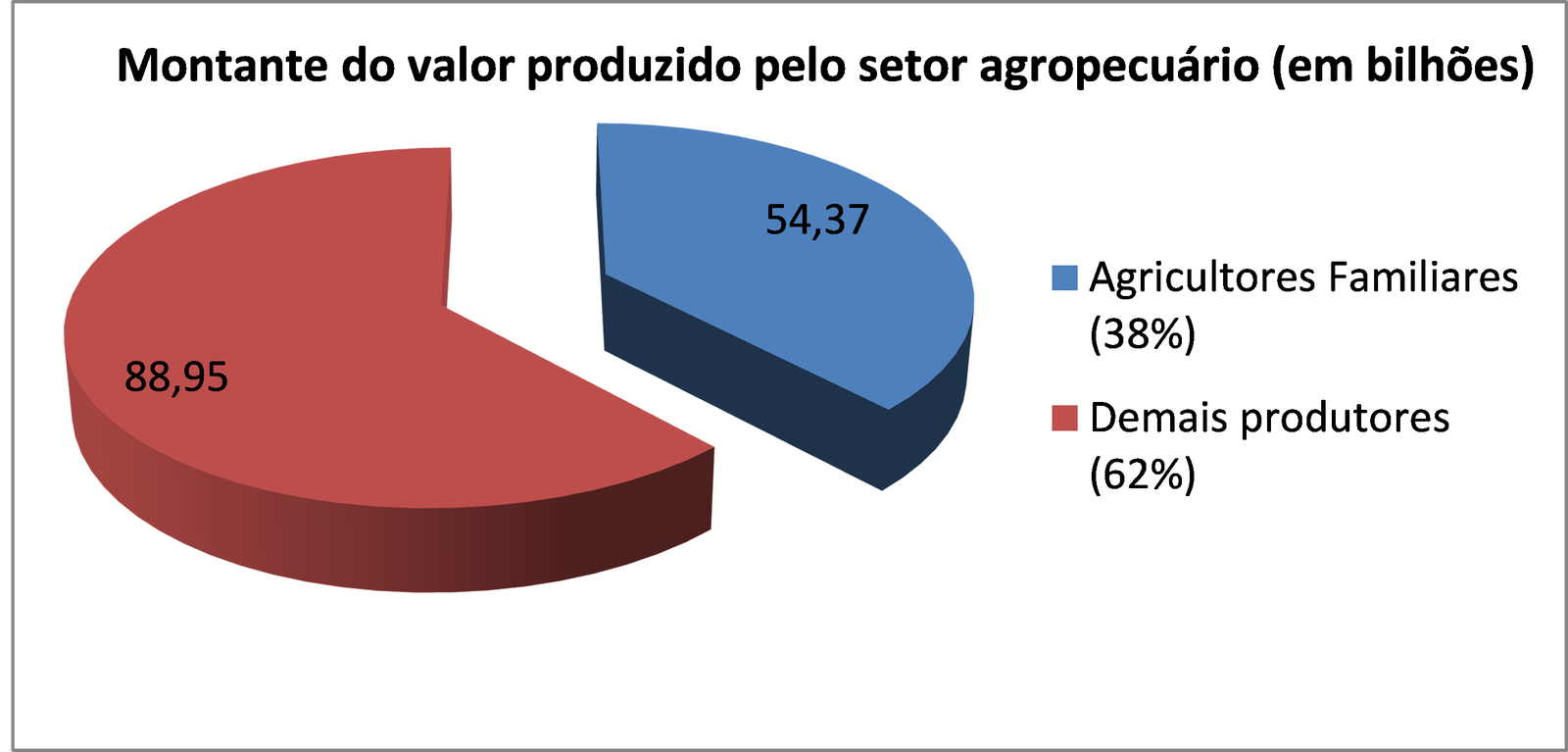
Chart prepared by CoDAF
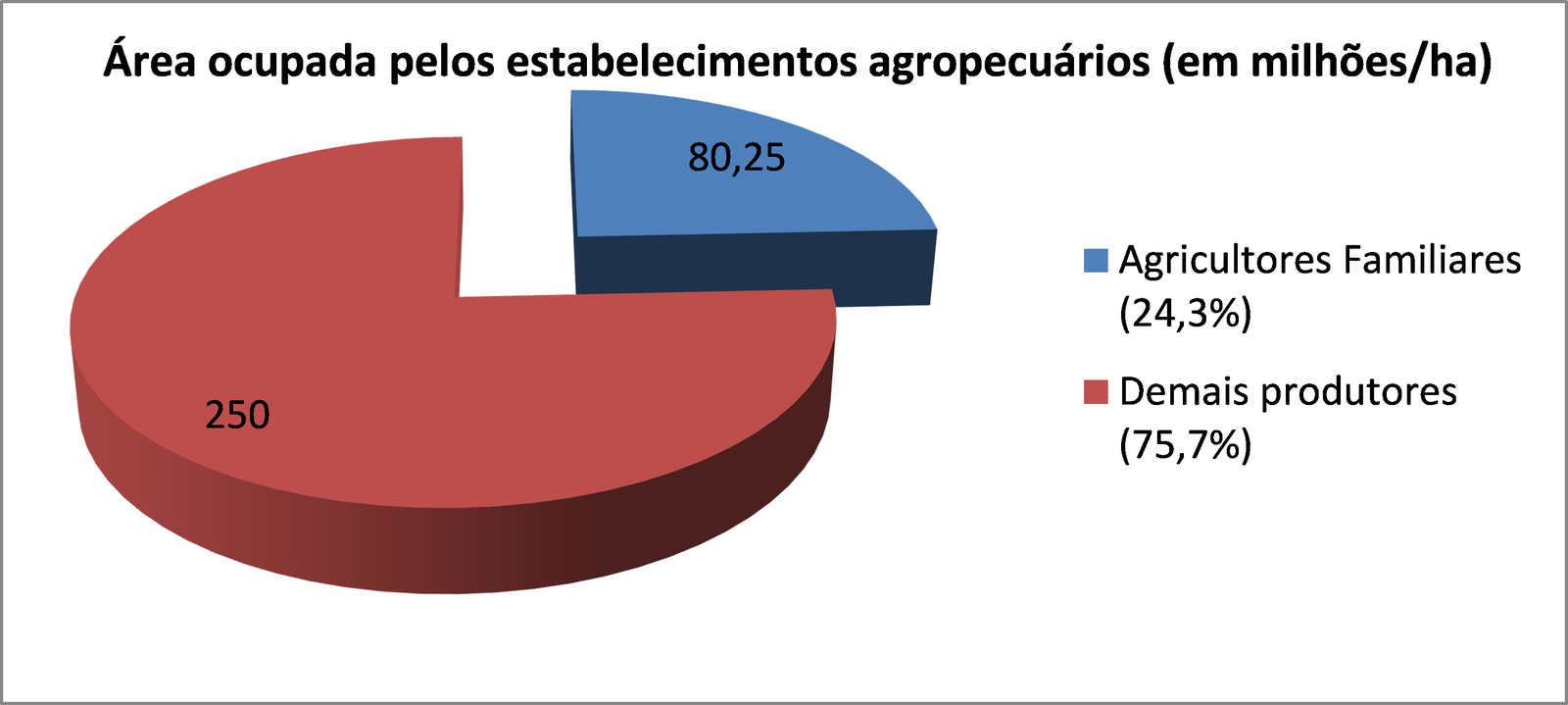
Chart prepared by CoDAF
The share of Family Farming in the production of cassava (87%), beans (70%), pork (59%), milk (58%), poultry (50%) and corn (46%) reinforces its importance in the Brazilian agricultural landscape.
The figures above point to a concentration in land ownership, where 15.6% of all non-family establishments occupy 75.7% of all the land, using an average area of 309.18 ha for production, compared with the 18.37 ha allotted to family properties.
Thus, the relevant position held by Family Farming stands out even more, even though it lacks the visibility that production based on large-scale models has, especially those aimed at export. The work done within family enterprises is the guarantee of a domestic supply aligned with the population's food needs, creating an environment conducive to reducing hunger and to development and well-being in the countryside.
Source: 2006 Agricultural Census. Brazilian Institute of Geography and Statistics (IBGE). Available at: <http://biblioteca.ibge.gov.br/visualizacao/periodicos/51/agro_2006.pdf>.
Family Farming
There are many advantages for producers who qualify as family farming. Family farmers are beneficiaries of a series of specific public policies carried out at the municipal, state or federal level. The main federal policies are developed by the Special Secretariat for Family Farming and Agrarian Development, linked to the Social Ministry, and involve programs to encourage agricultural marketing, credit for investment or for covering crop costs, production insurance and land acquisition. However, in order to benefit from most of the programs, producers must meet the guidelines defined by Law No. 11.326/2004 and hold a Pronaf Eligibility Declaration (DAP). To learn more about the DAP, click here.
Another advantage of qualifying as a family farmer is participation in the National Rural Technical Assistance Policy (ATER), a rural extension policy that seeks, through the training of agents, to foster the provision of services and the training of farmers.
Nowadays there are several certifications that private organizations pursue in order to qualify their products with seals that guarantee their standardization and quality. To this end, organizations seeking certification are encouraged to purchase a certain amount of raw material from family farmers, thus creating a commercial advantage for producers who qualify in this segment. An example is the Social Fuel Seal, for which biodiesel-producing companies must buy at least 20% of their raw material from family farming in order to hold this certification.
Family Farming
These are some of the agencies related to the Family Farming segment; on their respective portals you can find information on public policies and economic data.
Ministry of Agriculture: http://www.agricultura.gov.br/
São Paulo Department of Agriculture and Supply: http://www.agricultura.sp.gov.br/
National Society of Agriculture: http://sna.agr.br/
Special Secretariat for Family Farming and Agrarian Development: http://portal.mda.gov.br/portal/
Ministry of Social Development and Fight Against Hunger: http://www.mds.gov.br/
Institute of Agricultural Economics: http://www.iea.sp.gov.br/
Where to learn more
Agrolink is an agricultural website, treated as an information source, which presents on its home page three important variables for the production of a given crop: a news area, a weather area and the…
Balde Branco is a dairy-sector magazine founded in 1964. The magazine is published monthly and has received several awards for the news it has published.

Avicultura Industrial is a portal that integrates data sources for producers in the poultry production sector. The portal offers information related to market analysis and news. It also provides…
Open data
Brazil is the world's 4th largest cassava producer (CONAB, 2018), with a production of 20.8 million tons in 2018, grown on 1.4 million hectares. Data on cassava production in the state of São Paulo…
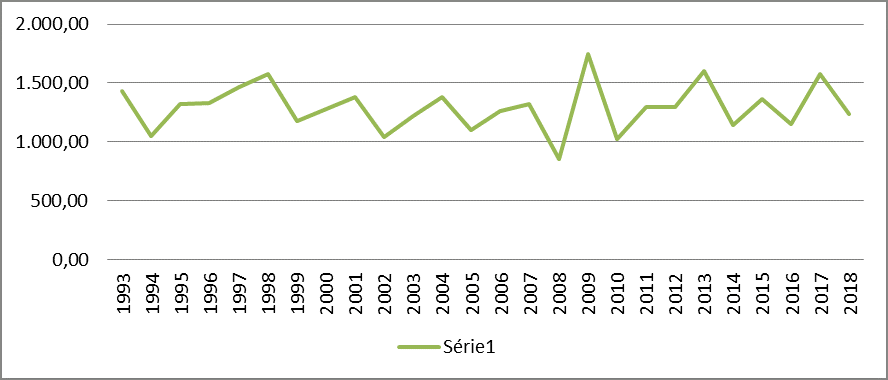
This data source representation provides data on rainfall indices for the Tupã region, collected from the portal of UDOP - Bioenergy Producers Union.
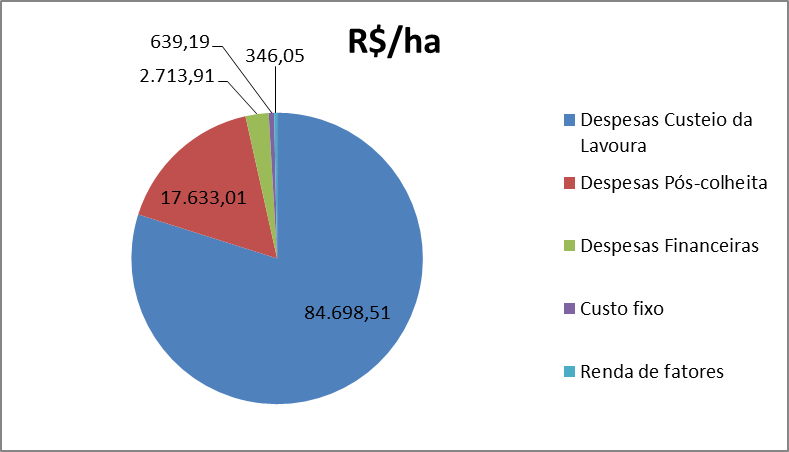
Tomato is one of the main vegetables produced in Brazil, with the State of Goiás being the largest contributor to this national production; the country is among the ten largest tomato producers in the world.